EDU Trending: Vouchers are Not about Choice, but Privatization
Vouchers are anathema to the U.S. educational system. Backed by some state governors and legislators, complicitly endorsed by some state courts. Vouchers are leading to the brick-by-brick destruction and ultimate collapse of traditional and free public schools across America. The 45 million students who attend them (and represent 83% of all K-12 enrolled students) will pay the price. Parents’ rights, students’ rights, how we got to this place, and what comes next are discussed below. Merle Schell
What does school choice mean? Parents have every right to educate their children in the type of school and setting they believe is best: A free traditional public school, a charter school (some free; others, not), a home school; or a private or religious school. These are the choices.
How do vouchers help? Labelled as “scholarships,” they can be applied to what are usually five figure tuition costs at private and independent religious schools. Note: 75% of private schools are also religious schools.
For those who cannot afford the cost of private school education, charters are an option. They are public schools with small enrollments whose students are often chosen by lottery. Although tuition is free, parents can qualify for a voucher to be used for their child’s school-related expenses
Today most charters are part of a regional or national chain, a business model. Think Kipp Academy, Success Academy, and Aspire Public Schools. Like private and religious schools, charter schools – independent or chain – are privately held institutions. Each has a Board of Directors and a COO or Head of School.
Schools structured as business entities (private, religious, and charter) have avenues for financial support: Donors, business sponsorships, general fundraising. Although charters get some public funds, they get less per pupil than traditional public schools, and, in exchange, charters have curriculum control and privmultiple acy in running their organization akin to private and religious schools. Private, religious, and charter schools are not subject to the same level of transparency and accountability as traditional public schools.
Where does the “scholarship” voucher money come from? From the per pupil expenditures (PPE) allotted to traditional public schools who are charged with providing a “free and appropriate public education” (FAPE) for their students. PPE covers costs for all student services and resources, including faculty and staff, transportation, plus school infrastructure and operations. State officials deliberately divert some of these funds for their state’s voucher or “scholarship” program.
How much money is available through vouchers for each student? It varies, but the per student range is $4,500 to $7,000 and up annually. The argument is that if a pupil leaves public education, he/she can rightfully take their per pupil expenditure money with them. It is a duplicitous position because as noted above, PPE covers a multitude of necessary operational costs as well as student expenses..
In addition, it covers some of the costs for kids with special needs (95% of whom are in free traditional schools, not in private or charter institutions).
Vouchers are given directly to private and religious school students and their families as “scholarships” to use as they wish: Public funds for private use.
Vouchers are also available to students and families who attend free charter schools.
Approximately, how many students are enrolled in private and religious schools? In charter schools? In traditional public schools?
5.7MM students (10.1%) in private and religious schools
7.4MM students (3.7%) in charter schools
49MM students (83%) in traditional public schools (including 95% of students with special needs.
Note: The remaining 3.2 % may be attributed to homeschooling.
Even so, not every student in a private, religious, or charter school has wealthy parents. How can they get assistance for tuition other than through public school monies i.e. vouchers?
a. They can access the built-in resources of these schools
1. Private and religious schools offer financial aid and scholarships.
2. Charter schools are free and do not need voucher money from families
b. They can find other ways. The bottom line is that parents who have made the choice to give their children a private, religious, or charter school education should privately exercise all avenues for financing their choice. Tuition costs and fees are their obligation.
Monies earmarked for students and infrastructure at free traditional public schools should not be hijacked for use by outsiders. Free traditional public schools and their students are not responsible for absorbing any costs for children attending a private, religious, or charter school.
Is it even legal to take money intended for traditional public schools and their students and to redirect and redistribute it to private school students for their personal use? It is immoral and unethical. It sounds like fraud. Such action certainly does not adhere to The Constitution which says the government should observe separation of church and state and not fund religious schools; it also prohibits the use of public-school money for private school learning. Note: Most state constitutions agree.
BUT some state governors and legislators blithely obviate the Constitution with word smithing hocus-pocus that override the Founding Fathers’ language and clear intentions.
Stripping resources from students in traditional public schools is sacrificing the “free and appropriate education’ (FAPE) to which all students are entitled. It undermines their opportunities to learn, grow, achieve, and succeed. It limits their futures. In addition to these indignities, the Federal Government’s funding cuts for free school lunch and SNAP mean that many children in traditional public schools will be hungry, less able to focus and learn.
It is no surprise, then, that due to fewer resources and services, enrollment is declining in traditional public schools.
Parents are pulling their kids from public schools and enrolling them primarily in the charter school chains that are rapidly increasing throughout the country, doubling their numbers in the last decade. There has been a similar increase in homeschooling numbers as well.
Maybe that is a good thing. Don’t students in private settings and in charters demonstrate higher academic achievement than those attending traditional public schools? Not necessarily. It depends on the individual school and how you look at the numbers.
The truth is that most private, religious, and charter schools have neither the personnel or training to support students with learning disabilities, students with physical and/or emotional needs, ELL students, immigrants and refugees who may never have had any formal snchooling.
The great majority (95%) of these students are helped and educated in free traditional public schools. Understandably, their scores on standardized tests tend to be lower than other students in their grade group. Their scores will bring down the overall score of a traditional public school.
When these students are not in the equation and the playing field is leveled, proficient scores of students tends to be comparable across all types of educational institutions (private, religious, charter, or traditional public).
The draining of dollars and the subsequent shrinking of services from traditional public schools is continuous. Every dollar diverted will negatively impact the education of the 45 million K-12 students who attend these schools. To repeat, they represent 83% of all enrolled K-12 students. When the depletion of funding is so great that these schools can no longer provide their students with the education and services they deserve, they will close.
What will happen to the children who attend traditional public schools? Where will they go and what will they do when their schools cease to exist? No one seems to be addressing these questions.
And finally, what is the point? The educational crisis in this country is about a lot more than vouchers. They are simply one vehicle used to deplete and destroy free, appropriate, transparent, and accountable full-service education for those parents and students who want it. De facto, their right to choose Is totally ignored. They are not the point.
It is not about the parents who enroll their children in private, religious, or charter schools. They have the right to choose where their children are educated. They, too, are not the point.
The point is not choice! The point is to privatize education. It is a concerted push of some governors and state legislators, some business entities, and Federal Government officials. The goal is to make education a for-profit business, with no need for transparency or equal opportunity, accountable to shareholders first, parents and students second.
American education is at risk. Those playing three card monte with public school money are assuring that public-school kids can never win. As parents, as a country, we have a lot to consider.
News for Your Views: What to Do? What to Do?
CTE (Career and Technical Education) has been given the boot. One of the most motivating and successful K-12 education and career prep programs in decades may lose some funding and support in its transfer from the Dept. of Education to the Dept. of Labor? What’s up with that? Note: Some plans are on hold because of challenges raised in the courts. Education Dept. Plan to Send CTE Programs to Labor Stokes Concern - CAPPS. What’s up with that?
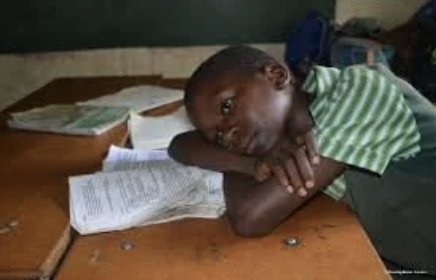
Hungry children cannot learn. The Dept. of Education is set to defrost and release 5.5 billion dollars -half of which is for teacher professional development to learn how to be better teachers. But teachers can’t teach hungry kids and the money for free and reduced lunch and other food programs, including SNAP were and remain cut.
AI: Will all minds think alike? Vocabulary and word patterns are as individual as we are. But if or, as some suggest, when everyone speaks or writes exactly like AI, can we presume that they think like AI as well? Hint: If you find yourself using the words ”delve” or “meticulous” a lot, chances are you’ve fallen under the AI spell. And if so, who is the real robot?
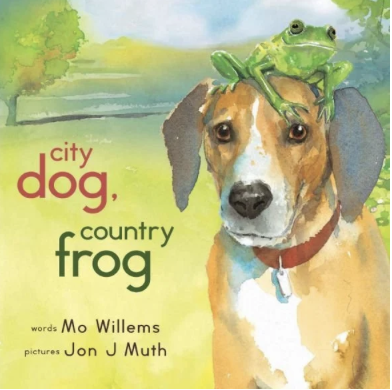
City Dog, Country Frog (2010)
Author: Mo Willems Pictures: Jon J Muth
https://www.google.com/search?q=City+Dog%2C+Country+Frog+video+reAD+ALOUD&oq=City+Dog%2C+Country+Fro
Butterfly Park (2015)
Author and Illustrator: Elly MacKay https://www.google.com/search?q=+Butterfly+Park+by+Elly+Mackay&sca_esv=55a1b92d0f70e7e7&sxsrf=AE3TifNPnIAHGyn3o

Question of the Day: Will AI Control Us?
Which billionaire entrepreneur predicts that AI will replace most doctors and teachers within 10 years?
a) Bill Gates
b) Diane Hendricks
c) Jensen Huang
d) Elon Musk
e) Lynda Resnick
For the correct answer, please go to www.merleschell.com/blog/unschooling
From Me to You: Summer Reading
A few years ago, I wrote a reflection in which I suggested that children’s books should be required reading by adults. I believe this is true now more than ever because we need the optimism and hope with which they embrace us. Children’s books offer life lessons gently - sometimes with laughter, other times with tears, and always with a sense of renewal and personal strength. Never preaching or lecturing. Without agendas or bias of any kind. They are authentic, relatable, relevant and fun.
Through their characters, these stories show us the meaning of kindness, responsibility, acceptance, gratitude, good manners, an open heart, an open mind, friendship, love, authenticity, honesty, spirit, grit, perseverance, and the wonders of our beautiful world. They foster belief in our special selves. And so, they make us feel safe, happy, peaceful, loved, and able to love in return.
Parenthetically, wouldn’t it be lovely if every local, state, and federal official, as part of their oath of office, pledged to read one children’s book a day and summarize its meaning on their social media?
Until then, here are four of my favorite children’s books. Wonderfully written, beautifully illustrated, they are perfect family fare for the summer (or any time). I hope you and your family enjoy them. Also, watch the read aloud videos for three and the launch party for one of them when you click the links below.
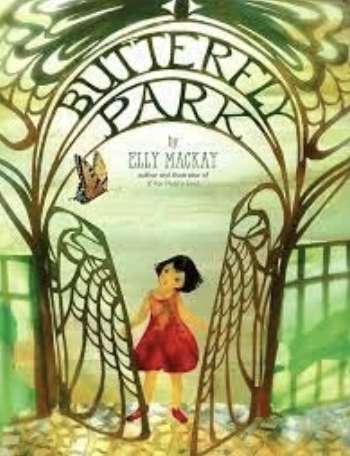
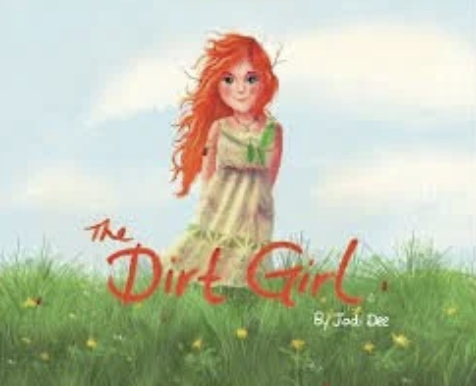
The Dirt Girl (2023)
Author: Jodi Dee
Co-Illustrators: Sara Roche and Ed Espitia https://www.youtube.com/watch?v=daD8aleX3b8&ab_channel=Mr.Lohn%2CtheMcGinnSchoolLibrarian
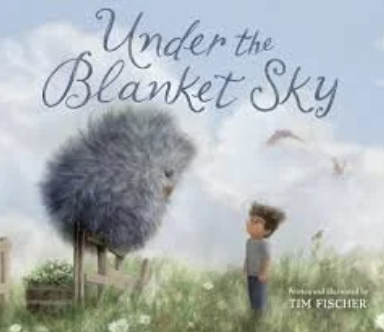
Under the Blanket Sky (2023)
Author and Illustrator: Tim Fischer https://www.youtube.com/watch?v=hujdMsg62LI&ab_channel=ReadingRocket
(Launch Party)
Have a wonderful summer. See you in the Fall.
-Merle Schell